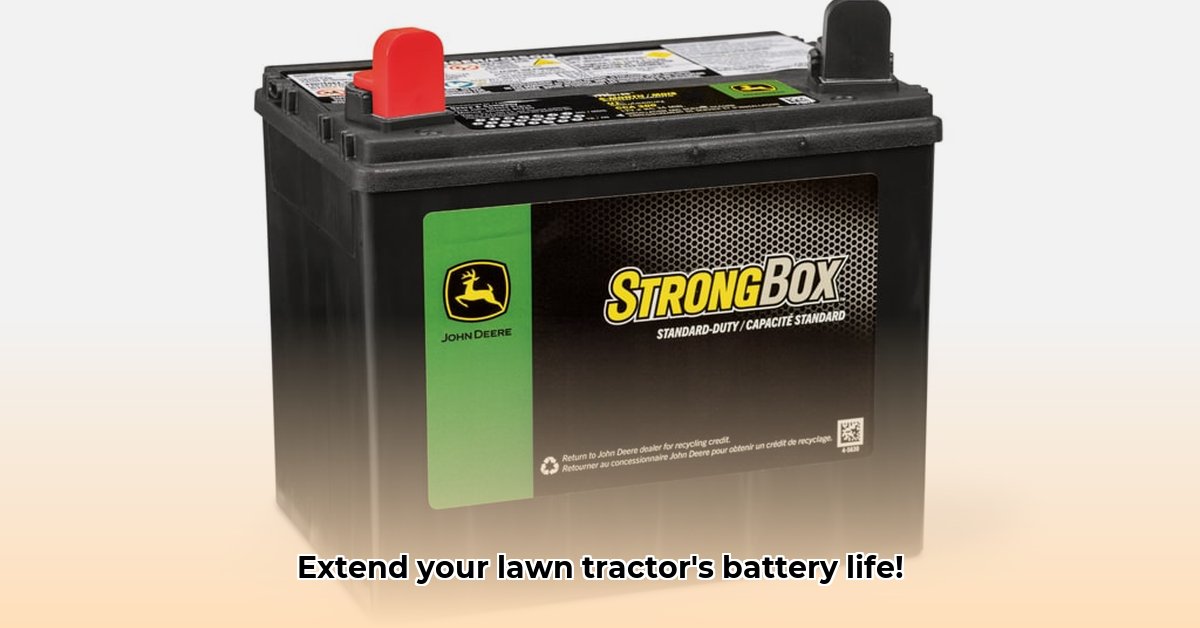
Understanding Your Lawn Tractor's Power Source: A Deep Dive
Let's be honest: a dead lawn tractor battery is nobody's idea of a good time. But by understanding your battery and implementing a proactive maintenance plan, you can significantly extend its lifespan and avoid costly replacements. Most lawn tractors utilize 12-volt lead-acid batteries, categorized as either flooded or maintenance-free. Flooded batteries, similar to older car batteries, require regular fluid level checks. Maintenance-free batteries, on the other hand, are designed for reduced upkeep. Always consult your owner's manual for specific instructions tailored to your tractor's battery type. This crucial first step ensures you're using the right maintenance techniques for optimal performance and longevity. For more information on John Deere tractor batteries, check out this helpful resource: John Deere Battery Info.
Keeping Your Battery Happy: A Practical Maintenance Routine
Regular maintenance is the cornerstone of a long-lasting battery. Think of it as preventative medicine for your lawn tractor's power source. Here's a straightforward routine:
Terminal Cleaning: Corrosion is the battery's biggest enemy, silently sapping its power. Regularly clean terminals with a wire brush and a baking soda and water solution. This simple step ensures efficient power transfer.
Electrolyte Level Checks (Flooded Batteries Only): If your battery is flooded, periodically check the electrolyte levels. Low levels indicate evaporation and require replenishment only with distilled water—tap water contains impurities that can damage the battery. A low electrolyte level is a significant warning sign that needs immediate attention to avoid irreversible damage to your battery.
Charging System Inspection: A malfunctioning charging system, either overcharging or undercharging, is a common culprit in premature battery failure. If your tractor struggles to start even after a full charge, consult a professional. Understanding the health of your charging system directly impacts the lifespan of your battery, highlighting the importance of regular maintenance checks.
Winter Storage: During periods of inactivity, particularly winter, disconnect the battery terminals to prevent parasitic drain. Store the battery in a cool, dry environment. This simple step protects the battery from the harsh effects of cold temperatures.
High-Quality Battery Selection: When purchasing a replacement battery, always refer to your owner's manual for specific recommendations. Choosing the correct battery type, size, and specifications is essential for optimal performance and compatibility with your lawn tractor.
Charging Smart: Optimizing Battery Performance
Like your smartphone, your lawn tractor battery benefits from consistent, moderate charging. Avoid deep discharges – completely draining the battery is stressful and significantly reduces its lifespan. Frequent "top-offs" are far superior to infrequent full charges. Consider investing in a smart charger, which monitors the charging process, preventing overcharging and maximizing battery longevity.
Recognizing Trouble: Signs of a Failing Battery
Early detection of problems saves you from unexpected downtime and expensive repairs. Watch for these warning signs:
Sluggish Starts: A longer-than-usual cranking time indicates a weakening battery.
Dim Lights: Weak lights suggest the battery is struggling to provide sufficient power.
Swollen Battery: A swollen battery casing indicates internal damage, possibly due to overcharging. Replace immediately.
Excessive Corrosion: Corrosion severely hinders battery performance, acting as insulation and restricting power flow.
Choosing a Replacement: Making an Informed Decision
When the time comes to replace your battery, consult your owner's manual for the correct specifications. Tractor Supply and similar retailers offer a wide range of options tailored to different lawn tractor models. Correct battery selection ensures optimal performance and compatibility, maximizing the return on your investment.
Beyond Basics: Additional Tips for Extended Battery Life
Beyond the routine maintenance, these practices significantly extend battery lifespan:
Prevent Deep Discharges: Regular top-offs are gentler on the battery than infrequent deep charges.
Maintain Cleanliness: Clean your battery regularly to prevent dirt and debris buildup, thereby maintaining consistent performance.
Consistent Inspection: Regular monthly inspections help identify problems early, saving you from costly repairs later.
Battery Type Comparison: Weighing Your Options
| Battery Type | Pros | Cons |
|---|---|---|
| Flooded Lead-Acid | Relatively inexpensive; readily available; easy to maintain | Requires regular maintenance (water checks); prone to leaks and spills |
| Maintenance-Free | Low maintenance; sealed design prevents leaks; generally durable | More expensive than flooded; slightly shorter lifespan in some cases |
| AGM (Absorbent Glass Mat) | Durable; resists vibration and shock; spill-proof design | Generally the most expensive option |
A well-maintained battery is crucial for a smoothly running lawn tractor. By following these guidelines, you can significantly extend its lifespan, saving time, money, and frustration. Regular maintenance ensures your green machine stays healthy and ready for action, season after season.